Greetings and Salutations on the Prophet (SAW)

Posted by AYYAZ KHAN On March - 15 - 2010

The Qur’anic verse pertaining to salat and salam is highly meaningful and replete with wisdom. Allah proclaims in the Qur’an as follows: Undoubtedly, Allah and His angels send blessings on the Prophet (صلى الله عليه وآله وسلم). O believers! You (too) send your blessings upon him and salute him with all respect.[1]

Islam on Prevention of Heart Diseases

Posted by AYYAZ KHAN On January - 12 - 2010

Islam is a comprehensive system of life, which provides the best forms of balance between the mundane and the spiritual. Islam strongly believes in good human health, physical, spiritual, mental and psychological. Therefore, it has provided the mankind with a lifestyle that guarantees the prevention of diseases.

The Awaited Imam

Posted by AYYAZ KHAN On February - 25 - 2010

01. “Sa‘īd ibn Musayyab relates that he heard Umm Salamah (رضي الله عنها) say: I heard the Messenger of Allāh (صلی اللہ علیہ وآلہ وسلم) mention Mahdī. He said: yes, Mahdī is the Truth (that is, his appearance is true and imminent) and he will be from the family of Fātimah.”

Islamic Concept of knowledge

Posted by AYYAZ KHAN On March - 10 - 2010

Morphologically the Arabic word ilm (علم) has been derived from ain (ع), lam (ل) and mim (م) that means to know: .ٱلْعِلْمُ إِدْرَاكُ الشَّيءِ بِحَقِيْقَتِهِ “Knowledge is the awareness of a thing with reference to its reality.” So, knowledge is that theorem or proposition which consists in knowing an objective reality existent in externity. t

Creation of Man

Posted by AYYAZ KHAN On January - 18 - 2010

he relationship between science and religion has often been a turbulent one. Historically, scientists have scorned the advent of religious ideas seeing them as in conflict with rational thinking. Much of this prejudice has stemmed from opposition by religious authorities to new scientific discoveries in the past. Christendom in particular displays a history of confrontations

Contents

Posted by Fayyaz Khan On 12:08 PM 0 comments

Production practices

Road leading across the farm allows machinery access to the farm for production practices.

Tillage is the practice of plowing soil to prepare for planting or for nutrient incorporation or for pest control. Tillage varies in intensity from conventional to no-till. It may improve productivity by warming the soil, incorporating fertilizer and controlling weeds, but also renders soil more prone to erosion, triggers the decomposition of organic matter releasing CO2, and reduces the abundance and diversity of soil organisms.[42][43]

Pest control includes the management of weeds, insects/mites, and diseases. Chemical (pesticides), biological (biocontrol), mechanical (tillage), and cultural practices are used. Cultural practices include crop rotation, culling, cover crops, intercropping, composting, avoidance, and resistance. Integrated pest management attempts to use all of these methods to keep pest populations below the number which would cause economic loss, and recommends pesticides as a last resort.[44]

Nutrient management includes both the source of nutrient inputs for crop and livestock production, and the method of utilization of manure produced by livestock. Nutrient inputs can be chemical inorganic fertilizers, manure, green manure, compost and mined minerals.[45] Crop nutrient use may also be managed using cultural techniques such as crop rotation or a fallow period.[46][47] Manure is used either by holding livestock where the feed crop is growing, such as in managed intensive rotational grazing, or by spreading either dry or liquid formulations of manure on cropland or pastures.

Water management is where rainfall is insufficient or variable, which occurs to some degree in most regions of the world.[36] Some farmers use irrigation to supplement rainfall. In other areas such as the Great Plains in the U.S. and Canada, farmers use a fallow year to conserve soil moisture to use for growing a crop in the following year.[48] Agriculture represents 70% of freshwater use worldwide.[49]

Processing, distribution, and marketing

In the United States, food costs attributed to processing, distribution, and marketing have risen while the costs attributed to farming have declined. From 1960 to 1980 the farm share was around 40%, but by 1990 it had declined to 30% and by 1998, 22.2%. Market concentration has increased in the sector as well, with the top 20 food manufacturers accounting for half the food-processing value in 1995, over double that produced in 1954. As of 2000 the top six US supermarket groups had 50% of sales compared to 32% in 1992. Although the total effect of the increased market concentration is likely increased efficiency, the changes redistribute economic surplus from producers (farmers) and consumers, and may have negative implications for rural communities.[50]

| edit post

Contents

Posted by Fayyaz Khan On 11:59 AM 0 comments

Crop production systems

Farmers work inside a rice field in Andhra Pradesh, India.

Cropping systems vary among farms depending on the available resources and constraints; geography and climate of the farm; government policy; economic, social and political pressures; and the philosophy and culture of the farmer.[34][35] Shifting cultivation (or slash and burn) is a system in which forests are burnt, releasing nutrients to support cultivation of annual and then perennial crops for a period of several years. Then the plot is left fallow to regrow forest, and the farmer moves to a new plot, returning after many more years (10-20). This fallow period is shortened if population density grows, requiring the input of nutrients (fertilizer or manure) and some manual pest control. Annual cultivation is the next phase of intensity in which there is no fallow period. This requires even greater nutrient and pest control inputs. Further industrialization lead to the use of monocultures, when one cultivar is planted on a large acreage. Due to the low biodiversity, nutrient use is uniform, and pests tend to build up, necessitating the greater use of pesticides and fertilizers.[35] Multiple cropping, in which several crops are grown sequentially in one year, and intercropping, when several crops are grown at the same time are other kinds of annual cropping systems known as polycultures.[36]

In tropical environments, all of these cropping systems are practiced. In subtropical and arid environments, the timing and extent of agriculture may be limited by rainfall, either not allowing multiple annual crops in a year, or requiring irrigation. In all of these environments perennial crops are grown (coffee, chocolate) and systems are practiced such as agroforestry. In temperate environments, where ecosystems were predominantly grassland or prairie, highly productive annual cropping is the dominant farming system.[36]

The last century has seen the intensification, concentration and specialization of agriculture, relying upon new technologies of agricultural chemicals (fertilizers and pesticides), mechanization, and plant breeding (hybrids and GMO's). In the past few decades, a move towards sustainability in agriculture has also developed, integrating ideas of socio-economic justice and conservation of resources and the environment within a farming system.[37][38] This has led to the development of many responses to the conventional agriculture approach, including organic agriculture, urban agriculture, community supported agriculture, ecological or biological agriculture, integrated farming, and holistic management.

[edit] Crop statistics

Important categories of crops include grains and pseudograins, pulses (legumes), forage, and fruits and vegetables. Specific crops are cultivated in distinct growing regions throughout the world. In millions of metric tons, based on FAO estimate.

Top agricultural products, by crop types
(million metric tons) 2004 data
Cereals 2,263
Vegetables and melons 866
Roots and Tubers 715
Milk 619
Fruit 503
Meat 259
Oilcrops 133
Fish (2001 estimate) 130
Eggs 63
Pulses 60
Vegetable Fiber 30
Source:
Food and Agriculture Organization (FAO)
[39


Top agricultural products, by individual crops
(million metric tons) 2004 data
Sugar Cane 1,324
Maize 721
Wheat 627
Rice 605
Potatoes 328
Sugar Beet 249
Soybean 204
Oil Palm Fruit 162
Barley 154
Tomato 120
Source:
Food and Agriculture Organization (FAO)
[39]


| edit post

Contents

Posted by Fayyaz Khan On 11:51 AM 0 comments
History

A Sumerian harvester's sickle made from baked clay (ca. 3000 BC).

Since its development roughly 10,000 years ago,[22] agriculture has expanded vastly in geographical coverage and yields. Throughout this expansion, new technologies and new crops were integrated. Even then crops were modified through cross-breeding for better yields. Agricultural practices such as irrigation, crop rotation, fertilizers, and pesticides were developed long ago, but have made great strides in the past century. The history of agriculture has played a major role in human history, as agricultural progress has been a crucial factor in worldwide socio-economic change. Wealth-concentration and militaristic specializations rarely seen in hunter-gatherer cultures are commonplace in societies which practice agriculture. So, too, are arts such as epic literature and monumental architecture, as well as codified legal systems. When farmers became capable of producing food beyond the needs of their own families, others in their society were freed to devote themselves to projects other than food acquisition. Historians and anthropologists have long argued that the development of agriculture made civilization possible.

Ancient origins

The Fertile Crescent of Western Asia, Egypt, and India were sites of the earliest planned sowing and harvesting of plants that had previously been gathered in the wild. Independent development of agriculture occurred in northern and southern China, Africa's Sahel, New Guinea and several regions of the Americas. The eight so-called Neolithic founder crops of agriculture appear: first emmer wheat and einkorn wheat, then hulled barley, peas, lentils, bitter vetch, chick peas and flax.

By 7000 BC, small-scale agriculture reached Egypt. From at least 7000 BC the Indian subcontinent saw farming of wheat and barley, as attested by archaeological excavation at Mehrgarh in Balochistan. By 6000 BC, mid-scale farming was entrenched on the banks of the Nile. About this time, agriculture was developed independently in the Far East, with rice, rather than wheat, as the primary crop. Chinese and Indonesian farmers went on to domesticate taro and beans including mung, soy and azuki. To complement these new sources of carbohydrates, highly organized net fishing of rivers, lakes and ocean shores in these areas brought in great volumes of essential protein. Collectively, these new methods of farming and fishing inaugurated a human population boom that dwarfed all previous expansions and continues today.

By 5000 BC, the Sumerians had developed core agricultural techniques including large-scale intensive cultivation of land, mono-cropping, organized irrigation, and the use of a specialized labor force, particularly along the waterway now known as the Shatt al-Arab, from its Persian Gulf delta to the confluence of the Tigris and Euphrates. Domestication of wild aurochs and mouflon into cattle and sheep, respectively, ushered in the large-scale use of animals for food/fiber and as beasts of burden. The shepherd joined the farmer as an essential provider for sedentary and semi-nomadic societies. Maize, manioc, and arrowroot were first domesticated in the Americas as far back as 5200 BC.[23] The potato, tomato, pepper, squash, several varieties of bean, tobacco, and several other plants were also developed in the New World, as was extensive terracing of steep hillsides in much of Andean South America. The Greeks and Romans built on techniques pioneered by the Sumerians but made few fundamentally new advances. Southern Greeks struggled with very poor soils, yet managed to become a dominant society for years. The Romans were noted for an emphasis on the cultivation of crops for trade.

The Harvesters. Pieter Bruegel. 1565.

Middle Ages

During the Middle Ages, farmers in North Africa, the Near East, and Europe began making use of agricultural technologies including irrigation systems based on hydraulic and hydrostatic principles, machines such as norias, water-raising machines, dams, and reservoirs. This combined with the invention of a three-field system of crop rotation and the moldboard plow greatly improved agricultural efficiency.

Modern era

This photo from a 1921 encyclopedia shows a tractor ploughing an alfalfa field.
Satellite image of a farm in Minnesota.
Infrared image of the farm. To the untrained eye, this image appears a hodge-podge of colours without any apparent purpose. But farmers are now trained to see yellows where crops are infested, shades of red indicating crop health, black where flooding occurs, and brown where unwanted pesticides land on chemical-free crops.

After 1492, a global exchange of previously local crops and livestock breeds occurred. Key crops involved in this exchange included the tomato, maize, potato, manioc, cocoa bean and tobacco going from the New World to the Old, and several varieties of wheat, spices, coffee, and sugar cane going from the Old World to the New. The most important animal exportation from the Old World to the New were those of the horse and dog (dogs were already present in the pre-Columbian Americas but not in the numbers and breeds suited to farm work). Although not usually food animals, the horse (including donkeys and ponies) and dog quickly filled essential production roles on western-hemisphere farms.

The potato became an important staple crop in northern Europe.[24] Since being introduced by Portuguese in the 16th century,[25] maize and manioc have replaced traditional African crops as the continent's most important staple food crops.[26]

By the early 1800s, agricultural techniques, implements, seed stocks and cultivated plants selected and given a unique name because of its decorative or useful characteristics had so improved that yield per land unit was many times that seen in the Middle Ages. With the rapid rise of mechanization in the late 19th and 20th centuries, particularly in the form of the tractor, farming tasks could be done with a speed and on a scale previously impossible. These advances have led to efficiencies enabling certain modern farms in the United States, Argentina, Israel, Germany, and a few other nations to output volumes of high-quality produce per land unit at what may be the practical limit. The Haber-Bosch method for synthesizing ammonium nitrate represented a major breakthrough and allowed crop yields to overcome previous constraints. In the past century agriculture has been characterized by enhanced productivity, the substitution of labor for synthetic fertilizers and pesticides, water pollution, and farm subsidies. In recent years there has been a backlash against the external environmental effects of conventional agriculture, resulting in the organic movement.

The cereals rice, corn, and wheat provide 60% of human food supply.[27] Between 1700 and 1980, "the total area of cultivated land worldwide increased 466%" and yields increased dramatically, particularly because of selectively-bred high-yielding varieties, fertilizers, pesticides, irrigation, and machinery.[27] For example, irrigation increased corn yields in eastern Colorado by 400 to 500% from 1940 to 1997.[27]

However, concerns have been raised over the sustainability of intensive agriculture. Intensive agriculture has become associated with decreased soil quality in India and Asia, and there has been increased concern over the effects of fertilizers and pesticides on the environment, particularly as population increases and food demand expands. The monocultures typically used in intensive agriculture increase the number of pests, which are controlled through pesticides. Integrated pest management (IPM), which "has been promoted for decades and has had some notable successes" has not significantly affected the use of pesticides because policies encourage the use of pesticides and IPM is knowledge-intensive.[27] Although the "Green Revolution" significantly increased rice yields in Asia, yield increases have not occurred in the past 15–20 years.[27] The genetic "yield potential" has increased for wheat, but the yield potential for rice has not increased since 1966, and the yield potential for maize has "barely increased in 35 years".[27] It takes a decade or two for herbicide-resistant weeds to emerge, and insects become resistant to insecticides within about a decade.[27] Crop rotation helps to prevent resistances.[27]

Agricultural exploration expeditions, since the late nineteenth century, have been mounted to find new species and new agricultural practices in different areas of the world. Two early examples of expeditions include Frank N. Meyer's fruit- and nut-collecting trip to China and Japan from 1916-1918[28] and the Dorsett-Morse Oriental Agricultural Exploration Expedition to China, Japan, and Korea from 1929-1931 to collect soybean germplasm to support the rise in soybean agriculture in the United States.[29]

In 2005, the agricultural output of China was the largest in the world, accounting for almost one-sixth of world share, followed by the EU, India and the USA, according to the International Monetary Fund.[citation needed] Economists measure the total factor productivity of agriculture and by this measure agriculture in the United States is roughly 2.6 times more productive than it was in 1948.[30]

Six countries - the US, Canada, France, Australia, Argentina and Thailand - supply 90% of grain exports.[31] Water deficits, which are already spurring heavy grain imports in numerous middle-sized countries, including Algeria, Iran, Egypt, and Mexico,[32] may soon do the same in larger countries, such as China or India.[33]


| edit post

Contents

Posted by Fayyaz Khan On 11:42 AM 0 comments
Etymology

The word agriculture is the English adaptation of Latin agricultūra, from ager, "a field",[6] and cultūra, "cultivation" in the strict sense of "tillage of the soil".[7] Thus, a literal reading of the word yields "tillage of a field / of fields"...

Overview

Agriculture has played a key role in the development of human civilization. Until the Industrial Revolution, the vast majority of the human population labored in agriculture. Development of agricultural techniques has steadily increased agricultural productivity, and the widespread diffusion of these techniques during a time period is often called an agricultural revolution. A remarkable shift in agricultural practices has occurred over the past century in response to new technologies. In particular, the Haber-Bosch method for synthesizing ammonium nitrate made the traditional practice of recycling nutrients with crop rotation and animal manure less necessary.

The percent of the human population working in agriculture has decreased over time.

Synthetic nitrogen, along with mined rock phosphate, pesticides and mechanization, have greatly increased crop yields in the early 20th century. Increased supply of grains has led to cheaper livestock as well. Further, global yield increases were experienced later in the 20th century when high-yield varieties of common staple grains such as rice, wheat, and corn (maize) were introduced as a part of the Green Revolution. The Green Revolution exported the technologies (including pesticides and synthetic nitrogen) of the developed world to the developing world. Thomas Malthus famously predicted that the Earth would not be able to support its growing population, but technologies such as the Green Revolution have allowed the world to produce a surplus of food.[8]

Agricultural output in 2005.

Many governments have subsidized agriculture to ensure an adequate food supply. These agricultural subsidies are often linked to the production of certain commodities such as wheat, corn (maize), rice, soybeans, and milk. These subsidies, especially when instituted by developed countries have been noted as protectionist, inefficient, and environmentally damaging.[9] In the past century agriculture has been characterized by enhanced productivity, the use of synthetic fertilizers and pesticides, selective breeding, mechanization, water contamination, and farm subsidies. Proponents of organic farming such as Sir Albert Howard argued in the early 1900s that the overuse of pesticides and synthetic fertilizers damages the long-term fertility of the soil. While this feeling lay dormant for decades, as environmental awareness has increased in the 2000s there has been a movement towards sustainable agriculture by some farmers, consumers, and policymakers. In recent years there has been a backlash against perceived external environmental effects of mainstream agriculture, particularly regarding water pollution,[10] resulting in the organic movement. One of the major forces behind this movement has been the European Union, which first certified organic food in 1991 and began reform of its Common Agricultural Policy (CAP) in 2005 to phase out commodity-linked farm subsidies,[11] also known as decoupling. The growth of organic farming has renewed research in alternative technologies such as integrated pest management and selective breeding. Recent mainstream technological developments include genetically modified food.

As of late 2007, several factors have pushed up the price of grain used to feed poultry and dairy cows and other cattle, causing higher prices of wheat (up 58%), soybean (up 32%), and maize (up 11%) over the year.[12][13] Food riots have recently taken place in many countries across the world.[14][15][16] An epidemic of stem rust on wheat caused by race Ug99 is currently spreading across Africa and into Asia and is causing major concern.[17][18][19] Approximately 40% of the world's agricultural land is seriously degraded.[20] In Africa, if current trends of soil degradation continue, the continent might be able to feed just 25% of its population by 2025, according to UNU's Ghana-based Institute for Natural Resources in Africa.[21]

| edit post

Agriculture

Posted by Fayyaz Khan On 11:32 AM 0 comments

Agriculture is the production of food and goods through farming and forestry. Agriculture was the key development that led to the rise of human civilization, with the husbandry of domesticated animals and plants (i.e. crops) creating food surpluses that enabled the development of more densely populated and stratified societies. The study of agriculture is known as agricultural science.

Agriculture encompasses a wide variety of specialties and techniques, including ways to expand the lands suitable for plant raising, by digging water-channels and other forms of irrigation. Cultivation of crops on arable land and the pastoral herding of livestock on rangeland remain at the foundation of agriculture. In the past century there has been increasing concern to identify and quantify various forms of agriculture. In the developed world the range usually extends between sustainable agriculture (e.g. permaculture or organic agriculture) and intensive farming (e.g. industrial agriculture).

Modern agronomy, plant breeding, pesticides and fertilizers, and technological improvements have sharply increased yields from cultivation, and at the same time have caused widespread ecological damage and negative human health effects.[1] Selective breeding and modern practices in animal husbandry such as intensive pig farming (and similar practices applied to the chicken) have similarly increased the output of meat, but have raised concerns about animal cruelty and the health effects of the antibiotics, growth hormones, and other chemicals commonly used in industrial meat production.[2]

The major agricultural products can be broadly grouped into foods, fibers, fuels, and raw materials. In the 2000s, plants have been used to grow biofuels, biopharmaceuticals, bioplastics,[3] and pharmaceuticals.[4] Specific foods include cereals, vegetables, fruits, and meat. Fibers include cotton, wool, hemp, silk and flax. Raw materials include lumber and bamboo. Other useful materials are produced by plants, such as resins. Biofuels include methane from biomass, ethanol, and biodiesel. Cut flowers, nursery plants, tropical fish and birds for the pet trade are some of the ornamental products.

In 2007, about one third of the world's workers were employed in agriculture. The services sector has overtaken agriculture as the economic sector employing the most people worldwide.[5] Despite the size of its workforce, agricultural production accounts for less than five percent of the gross world product (an aggregate of all gross domestic products).

Contents

  • 1 Etymology
  • 2 Overview
  • 3 History
    • 3.1 Ancient origins
    • 3.2 Middle Ages
    • 3.3 Modern era
  • 4 Crop production systems
    • 4.1 Crop statistics
  • 5 Livestock production systems
  • 6 Production practices
  • 7 Processing, distribution, and marketing
  • 8 Crop alteration and biotechnology
    • 8.1 Genetic Engineering
    • 8.2 Herbicide-tolerant GMO Crops
    • 8.3 Insect-Resistant GMO Crops
    • 8.4 Costs and Benefits of GMOs
  • 9 Food safety and labeling
  • 10 Environmental impact
    • 10.1 Livestock issues
    • 10.2 Land transformation and degradation
    • 10.3 Eutrophication
    • 10.4 Pesticides
    • 10.5 Climate Change
  • 11 Distortions in modern global agriculture
  • 12 Energy and Agriculture
    • 12.1 Mitigation of effects of petroleum shortages
  • 13 Policy
  • 14 See also
    • 14.1 Lists
  • 15 References
    • 15.1 Notes
    • 15.2 Bibliography
    • 15.3 External links
| edit post

Sugarcane

Posted by Fayyaz Khan On 10:41 AM 0 comments
1. Sugarcane Production In Pakistan.

1.1 Introduction:

Sugarcane is an important industrial and cash crop in Pakistan and in many countries of the world. It is grown in tropical and sub-tropical regions of the world in a range of climates from hot dry environment near sea level to cool and moist environment at higher elevations. Besides sugar production, sugarcane produces numerous valuable byproducts like, alcohol used by pharmaceutical industry, ethanol used as a fuel, bagasse used for paper, and chip board manufacturing and press mud used as a rich source of organic matter and nutrients for crop production.

2. Factors Effecting the Production of Sugarcane:

Reasons for low sugar cane production.

2.1 Agricultural Factors.

(i) Unscientific/unsystematic agriculture practices

a) Improper selection of land,

b) Improper preparation of land

c) Conventional planting methods,

d) Late planting,

e) Moisture stress at critical stages of crop growth,

f) Poor management of ratoon crop

g) Early and late harvesting,

(ii) Environmental resistance,
(iii) Low soil fertility,
(iv)
defective varieties,
(v)
Pests, disease and weeds,
(vi)
Credit shortage,
(vii) Rapid/Unplanned increase in sugarcane acreage in unsuitable areas of Pakistan.

2.2 Policy Factor:

a) Lack of Research In Sugar Cane Technology.

b) Lack of Agricultural Education.

2.3 Economical Factor:

a) Variation in Prices.

b) Unavailability Of resources for the growers.

3. TO INCREASE OUR SUGARCANE YIELD PER UNIT

AREA:


Our sugar yield i.e. cane yield x sugar recovery %cane is less than half of the developed cane growing countries of the world. Still it is not the lowest in the world.

The goal of increasing sugar yield per unit area is difficult, time consuming and needs dedicated efforts of government, millers and the growers.

Some of the measures to bring down the cost of cultivation and improve cane productivity include the selection of the right varieties, maintenance of soil health, quality planting material, nutrient management, the adoption of copping systems approach, weed management, water management, ratoon management and sound post harvest handling, according to the scientists.

3.1 Role of Grower:

As Grower is the main key factor which can help to increase the sugarcane production from the field. In Pakistan most of the grower doesn’t know the proper method or procedure of sugarcane cultivation. So that’s why the cane produced is of no good quality and we have less cane and sugar recovery. So it is recommended that there should be organizations who should guide the growers to increase their production. Here are some of the steps that if taken properly can improve the sugar cane production.

3.2 Improvement in Production Technology

3.2.1 Land preparation:
Sugarcane is a deep-rooted crop and proper land preparation plays an important role in the development of cane root system, and achieving optimal growth of the crop. Land should be prepared by deep ploughing at least after every two years. The soil should be disked.

It is very important that well-rotten farmyard manure (FYM) should be applied a month prior to land preparation. Press mud from the sugar industry is another excellent source of organic matter and nutrients. .Green manuring may also serve the purpose.

Soil in the prepared field should be friable and well worked so that full germination takes place and later on plants grow without any inhibiting barriers (compact sub-soil layer).

3.2.2 Soil Insect Control at Planting Time


Growers should be ever mindful of practices they can use to decrease the possibility of soil insect damage. Only two crop conditions require use of a soil insecticide in Louisiana sugarcane fields and usually only in sandy soils. These are:

(a) When pasture, turf or grass-infested land is brought into cane production for the first time or after being out of cane production for several years. There are usually enough grubs or wireworms already established in this type of land to warrant a preventive application of insecticide at cane planting time. However, a soil insecticide application may not be needed with the second plant-cane crop if the field has been kept reasonably free of grass during the ratoon crops.

(b) When cane fields are extremely grassy, particularly when cane is planted in a field that was not kept free of heavy grass infestation when fallow. Ongoing wireworm and white grub infestations will persist in grassy fields. Again, this may be needed only on light or mixed soils.

Growers with fields similar to those described should consider control measures for soil insects at planting time and base chemical control on verification of soil insect pest infestations (with fermented corn baits). Based on new research data, the economic threshold is slightly above one wireworm per bait sample before planting. Soil insecticides have had a suppressive effect on beneficial predators in sugarcane studies.

3.2.3. Planting time:

The selection of an appropriate planting method and schedule greatly influences crop growth, maturity, and yield. Since low temperature and moisture stress are detrimental to germination and subsequent establishment, the planting season in subtropical regions is preferably spring. But in areas where winter is severe enough to restrict growth or even kill sugarcane, planting material may only be available in autumn, thus necessitating pre-winter planting. In tropical regions, particularly where irrigation is not practiced, a sufficiently moist season should be selected for planting and establishment.

There are two planting seasons: fall and spring. Fall planting starts from the first week of September and continues to mid-October in the Punjab and Sindh, while in the NWFP planting is done in October and November. Spring planting starts from mid-February and lasts until the end of March in the Punjab and Sindh. These planting times are strictly observed because late planting can reduce the yield by as much as 30 percent.

September planted crop usually produces 25 to 35 % higher yield.
In Pakistan Planting time of Sugarcane planting is usually carried out in autumn and spring seasons. Autumn planting is of high yield and high sugar recovery compared to spring planting. In fact, September planting gives very luxuriant growth, which is mostly vulnerable to lodging. The crop gives good appearance till June-July but is subject to lodging in July or even earlier if there are windstorms or excessive rains. Around 26 per cent of the growers plant sugarcane in October, 45 per cent in November, 2 per cent in December and 7 per cent in February.

3.2.4. Seed rate and planting pattern:

Appropriate seed rate and spacing are often ignored by farmers, with the result that the optimum plant population, which is the key factor in sugarcane production, is not achieved in the field. The seed rate and spacing between rows differ with variety. Thick-cane cultivars like 'BL-4', 'Triton', and 'PR-1000' require a higher seed rate and more space between the rows than thin and medium-cane varieties. Eight to nine tonnes of stripped cane per hectare for thick varieties, and six to seven tones for medium to thin varieties is sufficient to produce a desired plant population of about 0.15 million canes/ha. A spacing of 1 m between the rows of thick varieties, and 0.60-0.75 m for thin to medium varieties allows sufficient space for operations like intercultural and earthing up.

3.2.5. Method of Planting:

Sugarcane should be planted at a row spacing of 90 cm to 1 m. Two budded double sets should be placed end to end in the furrows covered with 2 to 3 cm soil layer. About 3.2 to 4 tonnes seed (80 to 100 maunds) of thin cane varieties and 4 to 5 tonnes seed (100 to 120 maunds) of thick varieties is sufficient to plant one acre.

Research has shown good yield increases in tonnage and sugar per acre when the planted row was widened from the V-furrow to the 15- to 18-inch furrow. It showed further yield increases as the furrow width was increased from 15 to 18 to 24 inches. Based on this research and the problems encountered by growers in handling furrow widths of more than 18 inches, it is suggested that growers use a 15- to 18-inch furrow for planting in 2001. Growers who can successfully handle the 24-inch width furrow are encouraged to do so. It is also suggested that the furrow opener be constructed to leave a wide bottom with a slight indentation on each side of the furrow and a slight ridge of loose soil in the middle of the furrow bottom. This opening configuration can be obtained by attaching a single disk on each side of the row opener to dig out the furrow sides and deposit the soil in the furrow middle. Some growers have found that packing rows ahead of opening will give more uniform furrows when opening with a three-row opener.

3.2.6. Depth of Planting with Relation to Water Furrow

To avoid water damage to seed cane, it should be placed at least 3 to 4 inches above the final water furrow or middle. In soils with poor internal drainage, the seed cane should be placed even higher above the final water furrow.

Growers should be aware of the need to keep the seed cane above the area where water levels will hurt cane stands. Low row height at planting time could be a problem, especially with billet seed cane.

3.2.7. Hot water seed treatment
Seed may be treated with hot water at 520 C for 30 minutes and with fungicide. This will help in better germination and the control of many cane diseases.

Soaking cuttings and treating with running water for 48 hours sometimes enhances germination of old cuttings. Soaking in hot water (500C) for 20 minutes greatly enhances germination. This, however, is difficult to control at a practical level. Treatment with running water has been suggested to remove fermentation products and inhibitors from the cutting. Indoleacetic acids (IAA) or naphthaleneacetic acid (NAA) treatment enhances root growth but delays bud development. Acetylene promotes the growth of the cutting. Substances including ethyl alcohol, ammonium phosphate, complete nutrient solution, and ferrous sulphate have all on occasions proved beneficial to germination. On the other hand, at the University of Agriculture, Faisalabad, experiments have shown that soaking cane setts in water, cow urine, and 2% KmnO4 solution before planting reduced yield

3.2.8. Amount of Soil Cover over Seed Cane

Research on depth of soil cover over seed cane indicates that soil cover in excess of 4 inches can cause yield losses even if the excess is removed in the spring following planting.

Heat-treated cane should be covered with 2 inches of packed soil. After the cane is up to a good stand and before freezing weather occurs, add an additional 2 inches of soil to protect from freeze damage. Do not cover heat-treated cane with more than 2 inches of packed soil at planting.


3.2.9.
Varieties:


Use healthy seed of improved varieties of sugarcane. This can increase cane yield from 20 to 25 per cent. Sugarcane varieties recommended for various provinces are given in Table 4.

Around 95 per cent planted BL-4 variety in the study area. This variety flourishes very well in heavy fertile and well-drained soil with good irrigation. As the variety occupied good fields, it established high yields. New variety BF-12-is yet in the stage of multiplication, while SPSG -26 and Th-10, has just been introduced. Results show that 87 per cent planted recommended varieties and the remaining 13 per cent planted non-recommended varieties The economic life span of sugarcane variety varies from 8 to 10 years and after that replacement the variety is necessary.


Available Sugarcane Tissue Cultured Varieties:


1. CP-43-33
2. CP- 77-400
3. CP 81-1435
4. ABT super
5. BF - 162
6. SPSG - 26
7. SPF - 234
8. BL - 4
9. T - 10

3.2.10. Recommended varieties of sugarcane.

Punjab

Early maturing: BL – 4 , L –116, BF – 162, CP 43-33,CP 72-2086, CP 77-400, SPSG-26, CPF-237

Mid season: TRITON, COL –54, SPF-213

Late maturing: L –118, COJ-84

| edit post

Maize

Posted by Fayyaz Khan On 10:32 AM 0 comments

INTRODUCTION

Maize being the highest yielding cereal crop in the world, is of significant importance for countries like Pakistan, where rapidly increasing population has already out stripped the available food supplies.In Pakistan maize is third important cereal after wheat and rice. Maize accounts for 4.8% of the total cropped area and 3.5% of the value of agricultural output. It is planted on an estimated area of 0.9 million hectare with an annual production of 1.3 million tonnes. The bulk (97%) of the total production come from two major provinces, NWFP, accounting for 57% of the total area and 68% of total production. Punjab contribute 38% acreage with 30% of total maize grain production. Very little maize 2-3% is produced in the province of Sindh and Balochistan. Though not included in Pakistan official statistics maize is an important crop of AJK with about 0.122 million hectare of maize being planted during kharif. Similarly a very growing and high yielding sector of maize, the spring maize area and production in Punjab is not accounted for , which covers around 0.070 million ha with about 050 million tonnes of maize grain being produced

Germplasm Development:

National Coordinated Maize Programme organize, acquire and distribute the exotic and local germplasm from different sources and agencies to the maize growers in the country. This germplasm provide source of genetic material to be used for development of varieties and hybrids Upto date NCMP has acquired about 9800 germplasm sources and distributed to various research scientists in the country.

Fertilizer Use in Maize:

Official fertilizer use figures for maize are not specifically recorded by the agricultural statistics services. However, extensive farm level surveys conducted by PARC/CIMMYT in various districts of NWFP and in the central Punjab reveal that approximately 66% of all maize growers now use chemical nitrogen fertilizes (70 kg N/ha) and about 25% use phosphorus (18 kg P/ha).

Mechanization:

While mechanization has been widely adopted in Pakistan for certain production operation i.e. land preparation & shelling, the use of tractors in planting, interculture and harvesting has not been optimized. The use of tractor is widespread in low and mid-land altitude area in NWFP and Central Punjab. More than 80% of maize farmers in both areas use mechanical sheller.

Training Manpower:

NCMP has played and still doing the important responsibility of training manpower throughout country. Over the past two decades, the programme has trained 5 Ph. D scientist and have provided short term training (local and abroad) to 165 young scientists, extension workers and interested growers.

CURRENT SEED SITUATION AND COVERAGE BY IMPROVED SEED

Although the formal commercial maize seed production system in Pakistan produces limited tonnage of certified seed, the nation public research service have attempted to produced and diffuse the seed of improved varieties through various adhoc seed multiplication campaigns. These campaigns have relied on planting of small demonstration seed multiplication plots on farmers fields. They have been effective in stimulating farmer to farmer distribution of improved seed to some extent.

Pakistan like many developing countries still depends largely on open pollinated varieties based on public seed organizations. Currently both the public and private sector are involved in promoting the seed production system. More recently the individual seed producers and community production/distribution system is being encouraged. These seed growers have been offered serial incentives i.e. door step availability of inputs i.e. pre-basic seed, insecticide, plating machinery etc, the complete disposal of seed with the help of extension agents and frequent consultation by technical staff to solve the confronting and new emerging problems.

The present situation regarding maize seed production and marketing is as follows:

Total seed produced 3175 metric tonnes

Hybrid seed 2050 "

QPV's Seed 1125 "

QPV's Seed

MRI (Sahiwal) 800 "

Punjab Seed Corporation 150 "

CCRI (Pirsabak) 50 "

ADA 100 "

NARC 15 "

---------------

Total 1125 "

Hybrid Seed

Cargill Pakistan 850

Rafhan CPC 400

Pioneer Seeds 450

ICI Pakistan 100

MMRI (Yousafwala) 100

CCRI 70

Noradas 80

-------------------

Total 2050

The seed produced by above mentioned agencies and individual seed growers is hardly sufficient to cover 10-15% area under maize, while about 26-30% of the total area is planted to improved seed of advanced generation. The remainder 50-60% is covered by either local or sort of mixture of local within proved germplasm.

| edit post

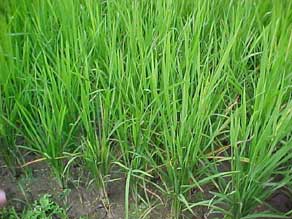
RICE

Posted by Fayyaz Khan On 10:31 AM 0 comments

BASMATI RICE

“The finest rice is from Pakistan whatever the brand name.”

Pakistan is the producer of the world’s finest long grained aromatic basmati rice. Known as Basmati Pak-10, this rice can be obtained in double jute/Hussein bags in different weights & consumer packs of 1 kg.

Description

Basmati, the king of rice, is held in the highest regard world over. Among all the other varieties of rice, none have the distinctive long grains or the subtle aroma for which this grain is considered so special. This also justifies the premium this rice commands against all other rice of the world.

It takes birth in the most fertile valleys and plains of Pakistan. It is harvested by hand with delicate care, aged to perfection and then processed. The result is an extra long, pearly white, delicate grain with an irresistible aroma and delectable taste bringing alive an age of nawabs and emperors, glittering courts and legendary chefs.

The name basmati originated from a Sanskrit word "BASH", which means smell. This rice has special features, which make it's naturally long grain fragrant and delicious in taste.

The legend says that this rice was meant to be consumed by maharajas (kings), maharanis (queens), princes and royal families. This unique rice is just one crop a year grown only in northern India and Pakistan, the region known as old Punjab - the land of five rivers originating from Himalayas.


Types and Forms of Rice

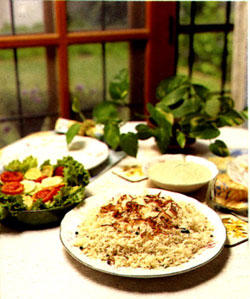
Super Kernel is a long grain rice with a slender kernel, four to five times longer that it's width. The grains are separate, light and fluffy when cooked, and mostly used for recipes such as biryani, which require rice of a distinct shape and texture.

Basmati Rice 385, is dry and separate when cooked, resulting in long, thin grains, since the long grain increases only in length when cooked.

Brown Rice is the least processed form of rice, as the kernels of rice have had only the hull removed. The light brown color of brown rice is caused by the presence of bran layers which are rich in minerals and vitamins, especially the B-complex group. With a natural aroma and flavor similar to that of roasted nuts or popcorn, it is chewier than white rice, and slightly more nutritious, but takes longer to cook. Brown rice may be eaten as is or milled into regular-milled white rice.

Parboiled Rice is a rough rice that has gone through a steam-pressure process before milling. It is soaked, steamed, dried, and then milled to remove the outer hull. This procedure gelatinizes the starch in the grain, and is adopted at the mill in order to harden the grain, resulting in less breakage, thus ensuring a firmer, more separate grain. Parboiled rice is favored by consumers and chefs who desire an extra fluffy and separate cooked rice.
| edit post

USEFUL TIPS FOR WHEAT PRODUCTION (Part 2)

Posted by Fayyaz Khan On 10:58 PM 0 comments
IRRIGATION
Wheat plant has two critical stages for its water requirements. The first is at tillering stage which starts about a week after emergence. The first irrigation should therefore, be applied not later than 12-18 days after seeding. In rice growing areas the sub-soil is usually saturated with moisture as moisture retention power of the soil is high. The first irrigation in these areas should be delayed as long as possible. In many cases it may even be more than a month after emergence.
The second critical stage is between anthesis and grain formation when irrigation is necessary. The remaining irrigations depending on rainfall should be well distributed between different growth stages. Generally 4-6 irrigations are applied to the wheat crop. The irrigation requirements in case of semi dwarf improved varieties is at the following growth stages.

1. At crown root initiation.
2. Tillering stage
3. Late jointing stage.
4. At flowering
5. Grain formation
6. Dough stage.

Among above mentioned stages, three stages are very critical.

1. Crown root initiation.
2. Boot stage.
3. Milk and dough stages.

Depending upon the availability of water following irrigation schedule can be applied.

Four irrigations.
1. Crown root initiation.
2. Tiller completion.
3. Booting Stage.
4. Milk stage.

Five irrigations.
1. Crown root initiation.
2. Tiller completion.
3. Late jointing.
4. Flowering stage.
5. Milk stage.

Six Irrigations.
1. Crown root initiation.
2. Tiller completion.
3. Late jointing.
4. Flowering stage.
5. Milk stage.
6. Dough stage.

Limited irrigation.
One irrigation.
1. Crown root initiation.

Two irrigations
1. Crown root initiation.
2. Boot stage.

Three irrigation
1. Crown root initiation.
2. Boot stage.
3. Milk stage.

WEED CONTROL

Weeds can significantly reduce wheat yield. Although crop rotation can reduce the population of weeds, a large amount of weed seeds still remains in the fields. For better control, barharrow and weeding should be done. Weeding become more easy if wheat is grown on seed beds 45 cm apart. The distance between two lines on a seed should be 15 cm. This method of planting does not affect plant population and wheat yield per acre. Other method of weed control is used of chemical weedicides. Weeds should be removed from the fields within 4-6 weeks of seeding. Agriculture experts have recommended the following weedicides mentioned in Table-4. Recommended dose should be applied with 120 liters of water after first irrigation at proper moisture. If sprayer is not available at proper time then all the powdry weedicides could be applied with sand at proper moisture after first irrigation or mixed with urea and then irrigate.

HARVESTING/THRESHING AND STORAGE

1. Clean parts of field where crop is not lodged should be selected to keep as seed. Harvesting and threshing of that field should be done separately to avoid any mixture.
2. Harvesting should be done 2-3 days earlier in case of semi dwarf improved varieties.
3. Harvesting should be done when grain moisture is around 16-17 percent.
4. Grain should be dried properly to bring down moisture at 9-10 percent before storage.
5. If possible use thresher or combine to be more efficient and avoid losses.
6. Seed should be stored in proper clean stores to avoid insect damage. Fumigation should be done in the seed stores.
7. Use clean bags for storage.

Resource Person:
Dr. Nafees Sadiq Kisana National Coordinator green123@isb.sdnpk.org wheat@narc.isb.sdnpk.org
| edit post

USEFUL TIPS FOR WHEAT PRODUCTION (Part 1)

Posted by Fayyaz Khan On 10:11 PM 0 comments
Wheat (Triticum spp.) is a worldwide cultivated grass from the Fertile Crescent region of the Near East. In 2007 world production of wheat was 607 million tons, making it the third most-produced cereal after maize (784 million tons) and rice (651 million tons). Wheat grain is a staple food used to make flour for leavened, flat and steamed breads, biscuits, cookies, cakes, breakfast cereal, pasta, noodles, or biofuel. Wheat is planted to a limited extent as a forage crop for livestock, and the straw can be used as fodder for livestock or as a construction material for roofing thatch.

National Out-Look

Wheat is the main staple food item of the country’s population and largest grain crop of the country. It contributes 13.1 percent to the value added in agriculture and 2.8 percent to GDP. The size of wheat crop is provisionally estimated at 23.4 million tons, 11.7 percent more than last year crop. SOURCE: Economic Survey of Pakistan 2008-09

Useful tips for wheat production

1. Moisture should be conserved during monsoon by using deep tillage technology.
2. Resistant improved wheat varieties should be planted.
3. Treat the seed with recommended fungicides to control seed borne diseases.
4. Irrigations at the time of tillering and grain formation are critical.
5. Planting must be finished before Nov. 30 to obtain maximum yield.
6. Nitrogenous and Phosphatic fertilizers should be used in a ratio of 1:1 or 1: 1-1/2 .
7. Potassium fertilizer must be used if wheat is planted after rice or sugarcane and in sandy soils which had continuously been irrigating by tube well water.
8. Weeds must be destroyed by using chemical weedicides.
9. Harvesting should be done few days earlier in case of semi dwarf improved varieties to avoid shattering damages.

LAND PREPARATION

Deep ploughing should be used by sub soiler or mould board if sub soil is hard.
2-3 ploughings are recommended where chronic weeds are present. If possible Dab method should be used.
Rotavator should be used in proper moisture if tractor facility is available. Soil should become well pulverized and planker can be used for this purpose.
Moisture conservation by using mold board in rainfed areas has been very successful in obtaining good yield.
In case of limited water in plains, field should be divided into sub-plots.
Field boundaries should be made strong. Rat holes should be closed and pruning of trees should be done in the farm to avoid shade effects to the crop.

METHOD OF PLANTING

Barani Areas:
Drill or poring method is recommended for planting in barani areas. Planker should not be used if planting is done by "Pora". All fertilizer should be applied before planting. Pre-soaking treatment to the seed should be given for 8-12 hours if moisture is limited. Water used for this purpose should be free of salts which otherwise can affect seed germination.
Irrigated Areas:
Seed should not be placed more than two inches when semidwarf improved varieties are planted. The best results have been obtained in planting by drill because uniform and proper germination is obtained in this method. Second method of planting in "Kera" should be used in proper moisture to obtain better results. Good results could not be achieved through broad cast, but if there is no other solution except this one then 4-5 kgs more seed rate is recommended in this method. Dry sowing can also be done if planting is late and irrigation can be applied after planting. Dry sowing should only be done after December, 15 where water availability is limited. Seed should not be put more deep in this case. SEED

TREATMENT

Seed can be treated with Benlate, Vitavax 200 or Topson-M at the rate of 2.5 gms/kg seed or Derosal at the rate of 1.0 gms and/or Raxil 2DC at the rate of 1.50 gms/kg seed. Seed treatment can be done by using Drum with cover or shaking in the plastic bag.

FERTILIZER APPLICATION

In general both nitrogenous and phosphatic fertilizers are of Primary importance to obtain good yields of wheat crop. It has been found, through experimentation, that both N and P must be in a proper balance in the ratio of 1:1 or at the most 1:1-1/2. Potassium sulphate should also be used at the rate of 12-15 kgs potash/acre (1/2 bag of Potassium sulphate) when wheat is planted after rice and sugarcane. The use of potash also becomes important in sandy weak soil which had been continuously irrigating with tube well water.
The whole quantity of phosphatic and half of nitrogenous fertilizer should be applied at seeding time while the remaining half of nitrogenous fertilizer be applied with first irrigation. In case phosphatic fertilizer is not applied at the time of planting this can be applied with first irrigation.
The whole quantity of Nitrogenous and phosphatic fertilizers should be used at planting time in rainfed areas. If somehow nitrogenous fertilizer was not applied at planting time, this can be applied at first rain. PH value of the most of the soils in Punjab has increased from 8.2 which is affecting fertilizer uptake efficiency of the soils. GYPSUM is recommended in such affected soils.

ORGANIC MATTER AND GREEN MANURING

In general our soils are deficient in organic matter and this situation is getting worst day by day. Therefore it is very important that proper crop rotation and green manure/farm yard manure should be used in our soils. This helps in the development of plant and increases water absorbing capacity of the soil. Root development become more vigorous. Guara and Jantar are good crops for green manuring. Guara has produced good results in irrigated areas whereas Jantar is recommended for saline soils and after rice. Arhar can be used for green manuring in barani areas.
Crop rotation for barani areas :
Wheat-Fodder-Wheat Wheat-Fodder-Millet
Crop rotation for plains : Wheat-Cotton-Sugarcane
Wheat-Berseem-Cotton.
Depending on soil conditions, 8-10 cart load of well rotten farm yard manure should be used.
| edit post