History
A Sumerian harvester's sickle made from baked clay (ca. 3000 BC).
Since its development roughly 10,000 years ago,[22] agriculture has expanded vastly in geographical coverage and yields. Throughout this expansion, new technologies and new crops were integrated. Even then crops were modified through cross-breeding for better yields. Agricultural practices such as irrigation, crop rotation, fertilizers, and pesticides were developed long ago, but have made great strides in the past century. The history of agriculture has played a major role in human history, as agricultural progress has been a crucial factor in worldwide socio-economic change. Wealth-concentration and militaristic specializations rarely seen in hunter-gatherer cultures are commonplace in societies which practice agriculture. So, too, are arts such as epic literature and monumental architecture, as well as codified legal systems. When farmers became capable of producing food beyond the needs of their own families, others in their society were freed to devote themselves to projects other than food acquisition. Historians and anthropologists have long argued that the development of agriculture made civilization possible.
Ancient origins
Further information: Neolithic Revolution
The Fertile Crescent of Western Asia, Egypt, and India were sites of the earliest planned sowing and harvesting of plants that had previously been gathered in the wild. Independent development of agriculture occurred in northern and southern China, Africa's Sahel, New Guinea and several regions of the Americas. The eight so-called Neolithic founder crops of agriculture appear: first emmer wheat and einkorn wheat, then hulled barley, peas, lentils, bitter vetch, chick peas and flax.
By 7000 BC, small-scale agriculture reached Egypt. From at least 7000 BC the Indian subcontinent saw farming of wheat and barley, as attested by archaeological excavation at Mehrgarh in Balochistan. By 6000 BC, mid-scale farming was entrenched on the banks of the Nile. About this time, agriculture was developed independently in the Far East, with rice, rather than wheat, as the primary crop. Chinese and Indonesian farmers went on to domesticate taro and beans including mung, soy and azuki. To complement these new sources of carbohydrates, highly organized net fishing of rivers, lakes and ocean shores in these areas brought in great volumes of essential protein. Collectively, these new methods of farming and fishing inaugurated a human population boom that dwarfed all previous expansions and continues today.
By 5000 BC, the Sumerians had developed core agricultural techniques including large-scale intensive cultivation of land, mono-cropping, organized irrigation, and the use of a specialized labor force, particularly along the waterway now known as the Shatt al-Arab, from its Persian Gulf delta to the confluence of the Tigris and Euphrates. Domestication of wild aurochs and mouflon into cattle and sheep, respectively, ushered in the large-scale use of animals for food/fiber and as beasts of burden. The shepherd joined the farmer as an essential provider for sedentary and semi-nomadic societies. Maize, manioc, and arrowroot were first domesticated in the Americas as far back as 5200 BC.[23] The potato, tomato, pepper, squash, several varieties of bean, tobacco, and several other plants were also developed in the New World, as was extensive terracing of steep hillsides in much of Andean South America. The Greeks and Romans built on techniques pioneered by the Sumerians but made few fundamentally new advances. Southern Greeks struggled with very poor soils, yet managed to become a dominant society for years. The Romans were noted for an emphasis on the cultivation of crops for trade.

The Harvesters. Pieter Bruegel. 1565.
Middle Ages
During the Middle Ages, farmers in North Africa, the Near East, and Europe began making use of agricultural technologies including irrigation systems based on hydraulic and hydrostatic principles, machines such as norias, water-raising machines, dams, and reservoirs. This combined with the invention of a three-field system of crop rotation and the moldboard plow greatly improved agricultural efficiency.
Modern era
Further information: British Agricultural Revolution and Green Revolution

This photo from a 1921 encyclopedia shows a tractor ploughing an alfalfa field.

Satellite image of a farm in Minnesota.

Infrared image of the farm. To the untrained eye, this image appears a hodge-podge of colours without any apparent purpose. But farmers are now trained to see yellows where crops are infested, shades of red indicating crop health, black where flooding occurs, and brown where unwanted pesticides land on chemical-free crops.
After 1492, a global exchange of previously local crops and livestock breeds occurred. Key crops involved in this exchange included the tomato, maize, potato, manioc, cocoa bean and tobacco going from the New World to the Old, and several varieties of wheat, spices, coffee, and sugar cane going from the Old World to the New. The most important animal exportation from the Old World to the New were those of the horse and dog (dogs were already present in the pre-Columbian Americas but not in the numbers and breeds suited to farm work). Although not usually food animals, the horse (including donkeys and ponies) and dog quickly filled essential production roles on western-hemisphere farms.
The potato became an important staple crop in northern Europe.[24] Since being introduced by Portuguese in the 16th century,[25] maize and manioc have replaced traditional African crops as the continent's most important staple food crops.[26]
By the early 1800s, agricultural techniques, implements, seed stocks and cultivated plants selected and given a unique name because of its decorative or useful characteristics had so improved that yield per land unit was many times that seen in the Middle Ages. With the rapid rise of mechanization in the late 19th and 20th centuries, particularly in the form of the tractor, farming tasks could be done with a speed and on a scale previously impossible. These advances have led to efficiencies enabling certain modern farms in the United States, Argentina, Israel, Germany, and a few other nations to output volumes of high-quality produce per land unit at what may be the practical limit. The Haber-Bosch method for synthesizing ammonium nitrate represented a major breakthrough and allowed crop yields to overcome previous constraints. In the past century agriculture has been characterized by enhanced productivity, the substitution of labor for synthetic fertilizers and pesticides, water pollution, and farm subsidies. In recent years there has been a backlash against the external environmental effects of conventional agriculture, resulting in the organic movement.
The cereals rice, corn, and wheat provide 60% of human food supply.[27] Between 1700 and 1980, "the total area of cultivated land worldwide increased 466%" and yields increased dramatically, particularly because of selectively-bred high-yielding varieties, fertilizers, pesticides, irrigation, and machinery.[27] For example, irrigation increased corn yields in eastern Colorado by 400 to 500% from 1940 to 1997.[27]
However, concerns have been raised over the sustainability of intensive agriculture. Intensive agriculture has become associated with decreased soil quality in India and Asia, and there has been increased concern over the effects of fertilizers and pesticides on the environment, particularly as population increases and food demand expands. The monocultures typically used in intensive agriculture increase the number of pests, which are controlled through pesticides. Integrated pest management (IPM), which "has been promoted for decades and has had some notable successes" has not significantly affected the use of pesticides because policies encourage the use of pesticides and IPM is knowledge-intensive.[27] Although the "Green Revolution" significantly increased rice yields in Asia, yield increases have not occurred in the past 15–20 years.[27] The genetic "yield potential" has increased for wheat, but the yield potential for rice has not increased since 1966, and the yield potential for maize has "barely increased in 35 years".[27] It takes a decade or two for herbicide-resistant weeds to emerge, and insects become resistant to insecticides within about a decade.[27] Crop rotation helps to prevent resistances.[27]
Agricultural exploration expeditions, since the late nineteenth century, have been mounted to find new species and new agricultural practices in different areas of the world. Two early examples of expeditions include Frank N. Meyer's fruit- and nut-collecting trip to China and Japan from 1916-1918[28] and the Dorsett-Morse Oriental Agricultural Exploration Expedition to China, Japan, and Korea from 1929-1931 to collect soybean germplasm to support the rise in soybean agriculture in the United States.[29]
In 2005, the agricultural output of China was the largest in the world, accounting for almost one-sixth of world share, followed by the EU, India and the USA, according to the International Monetary Fund.[citation needed] Economists measure the total factor productivity of agriculture and by this measure agriculture in the United States is roughly 2.6 times more productive than it was in 1948.[30]
Six countries - the US, Canada, France, Australia, Argentina and Thailand - supply 90% of grain exports.[31] Water deficits, which are already spurring heavy grain imports in numerous middle-sized countries, including Algeria, Iran, Egypt, and Mexico,[32] may soon do the same in larger countries, such as China or India.[33]










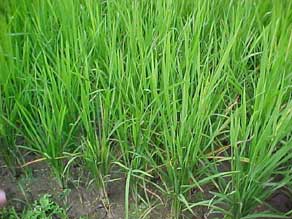
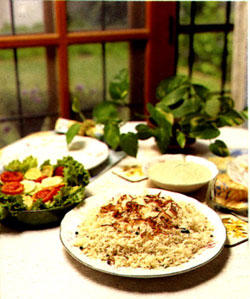 Super Kernel is a long grain rice with a slender kernel, four to five times longer that it's width. The grains are separate, light and fluffy when cooked, and mostly used for recipes such as biryani, which require rice of a distinct shape and texture.


